Category Archives: Philadelphia Artists

Philadelphia’s art scene is vibrant, ever-changing, combining technique and technology for new visions of reality, creating a transformative influence on life-style in the urban community and beyond.

Being

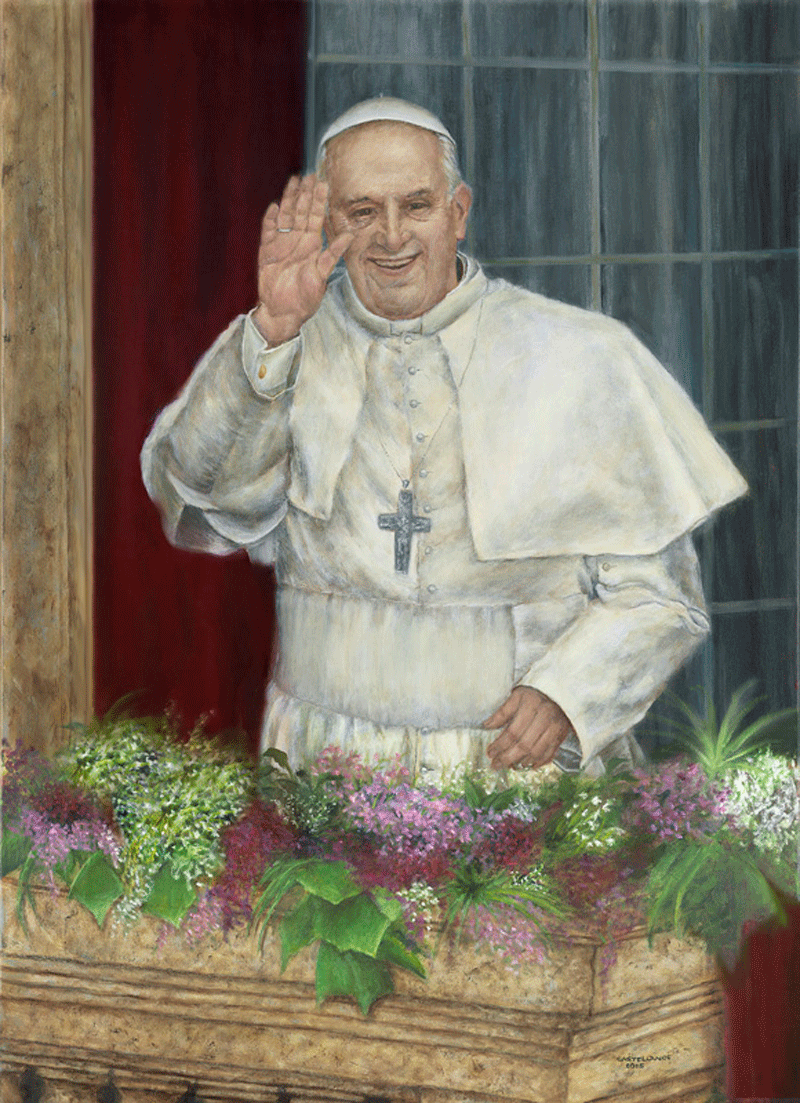
Sylvia Castellanos, Pope Francis

How My Portrait of Pope Francis Came Into Being by Sylvia Castellanos

It all began when Pope Francis’ plan to visit Philadelphia in 2015 made me  decide to paint him. This straightforward plan set off a chain of decision-making which I wish to chronicle here, particularly for the benefit of non-artists. Contrary to what people assume, painters are not necessarily handed a pre-packaged solution. The reality is far  more complex and time-consuming than that, and what develops sometimes surprises even the artist.

Catching the sitter’s likeness is only the beginning of a good picture. To be a quality portraitist, an artist must have many instincts in common with novelists and playwrights and, like them, focus on developing the personality.  If possible, too, he should also try to present his subject in  an ideal dramatic moment. In other words, he should catch  the subject in a pose that is somehow compelling to the viewer  in addition to conveying the person’s essence. 

I have done a great deal of painting of public figures from the present and the past, necessarily relying on photographs. There are people I have never painted because I’ve never found the right photographs—it is that important. More often, I find  one picture possessing some of the elements I seek, but the remainder must come from other sources.  I have developed a lot of practice in creating complex jigsaw puzzles as a result. 

I began by  considering the qualities I associated with Pope Francis. Charisma, a joyous smile, and extraordinary warmth toward people made my list. I started looking at  photographs with no particular design in mind.   

I found myself coming back to the picture on the left,  ideal in many ways. It  catches that great big smile full of joy and love, and the upraised hand is  greeting every one of us. This is a perfect example of the sort of compelling dramatic moment I just talked about.  I knew, though, this picture involved problems and so I’d keep looking.  And yet, after a while I’d be drawn back to it  again. Here was the problem—in what setting would he be waving at people? The background in the photograph clearly had to be discarded. What would I use in its place?

It’s not as simple as it sounds. My first thought was having him in a motorcade waving at the crowds, something closely associated with him. But look what happens when I try this:  He’s got his back to the crowd—no good!

Then I thought of using a church as a backdrop, which seemed reasonable.

The impression, unfortunately, was  that he’s in a big empty building waving at…an imaginary friend? Back to the drawing board.

Sometimes things that seem “meant to be” are identified only when well into the process. I am not sure when it came to me…a balcony!  This addressed all my concerns—the question  was settled. And I knew instantly which it would be—the iconic ceremonial balcony in St. Peter’s where popes address the crowds.

I was happy to find a very high resolution picture of the façade of St. Peter’s which,  enlarged, permitted me to see all the details of the balcony area. I noted the stone construction, the glass doors with thin white drapery, and the heavy  burgundy drapes outside the glass doors. I would need this visual  information.

Further research produced a few more photographs, including those of Easter Sunday celebrations, of which these are a sample.

The minute I saw them, I knew Easter would be my setting. I loved  using this most joyous occasion on the Christian calendar  as my theme, incorporating the gorgeous flowers and the beaming smile on  the Pope’s face. The photos permitted me to pick up on other details, such as the large  burgundy banner  draped over the front of the balcony, which I knew I would use. The main elements were now in place.

So that is what I began with—a figure detached from its original background  and a few pictures for a proposed setting  taken from angles I could not use.

That was okay, though, because I was about to recreate St. Peter’s at home.  After half an hour working with clay, cardboard, masking tape and a cutting tool, I had my own St. Peter’s balcony. Using the photograph of the façade of the building,  I printed out the wall at the back of the balcony, greatly enlarged (this, incidentally, is why I had been so happy to find a very high resolution photograph). I taped it to the vertical piece of cardboard behind my balcony and I was set.

And I had a pope, too.  Really.  That is the pope. 

I proceeded to take photographs from every conceivable angle for an important reason. The only drawback of the pose I had chosen was it was fully facing front, which is very static. The Pope had to be surrounded  with elements at an angle to give the composition more life. Out of the dozen images I took   from all perspectives, I chose the corner where the side and the front of the balcony meet, feeling this presented good artistic possibilities.

In real life, of course, when events take place the balcony is packed with people, and cameramen station themselves around that particular corner of the balcony. This raises   a consideration that I dealt with several times—historical accuracy vs. compositional logic.  A trade-off is inevitable, and the artist has   to make a choice on a case-by-case basis. Even I, a huge stickler for historical accuracy, accept this. Thus at the  St. Peter’s Basilica of Philadelphia, where we control access, all superfluous people have been vanished, leaving the Pope to make an intimate connection with us, the viewers of the picture.

So with the decision having been made, a little Photoshop magic pasted the real Pope into the shot. It’s starting to take shape now, right? ( I know you doubted).

I know in general terms what the balcony and the back wall are going to look like, but it’s   time to have something more detailed. Now I take out paper, pencil and rulers, and I do a perspective drawing of the relevant elements. All portraitists should have at least basic knowledge of perspective drawing, which provides the answer to every question he can have about where the lines are supposed to go.

Finally, I had to make a choice about the flowers.  As of 2015, Pope Francis has officiated over two Easter ceremonies. One year the colorful flowers in the pictures I showed earlier decorated the balcony, while the other year white roses (left) were chosen. So I could have my pick.  As gorgeous as these roses were, I reluctantly  decided against them.

I knew in advance the colors in the composition lacked variety.  There was the beige-grey color of the stone, the maroon of the textiles, and surfaces that were basically white—that was it. Moreover, there were lots and lots of square inches covered with white when one took in both the Pope’s garment and the drapery that covers much of the background.  I knew   I would need to handle each with different hues to avoid monotony. Was I going to have a third white element to add to the problem?  Not if I could help it. Out went the beautiful white roses in favor of the (also attractive) orchids/lilies that brought tones of fucshia and pink into the mix. And thank god for the green of the foliage, too.

I had one more horticultural task. I emailed the   flowers   to  an amateur gardener.  What are they? I asked. Either Dendrobium Orchids  or  Bugle Lilies, my friend wrote back. I printed out some pictures of both varieties of flower to use when time came to create from thin air  the floral arrangement

Only at  this point was I  finished. Oh, wait —there was  unfinished business. I still had to paint the portrait.  It only felt  like I was finished.

The weeks that followed took my work from a large piece of fabric covered with brown underpainting  to a completed painting, a process I don’t have the space to chronicle. Clearly, achieving the likeness was critical, for a portrait which does not look like the sitter is worthless.  Some important elements remained to be worked out as I went along. And yet, arguably the most important decisions were made before a single drop of paint was applied to canvas. 

Creating art is a complex process,  and the appearance of a picture does not just  fall into place by itself. Many factors  go into the design, and ways must often be found to simulate individual elements. The ultimate irony is that the more natural the result looks, probably the more thought went into it.
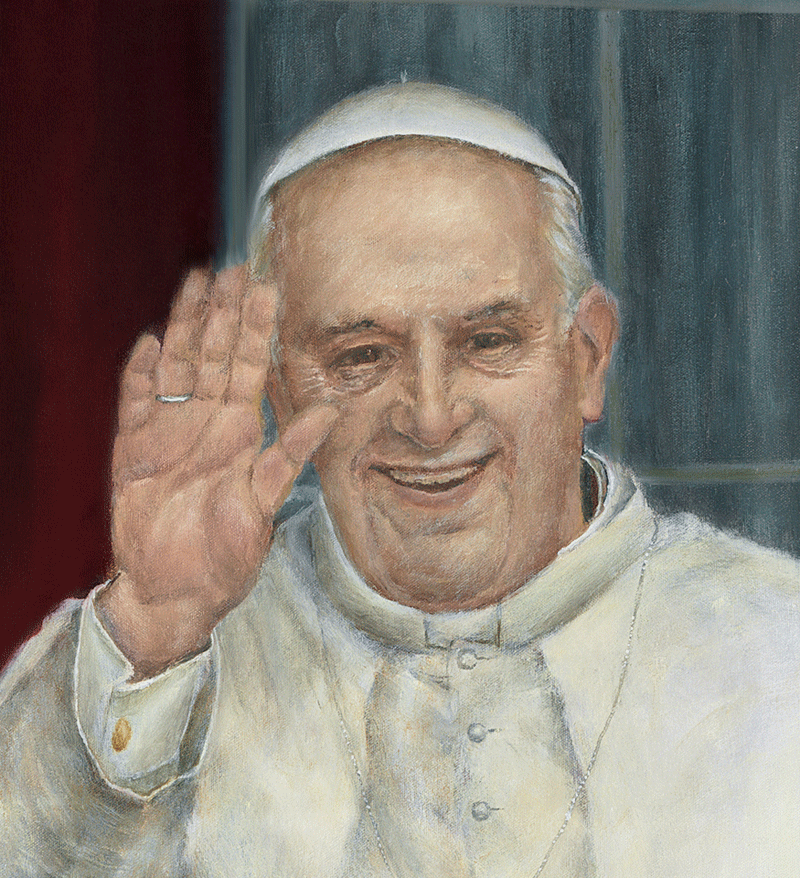
Sylvia Castellanos, Pope Francis Portrait of Pope Francis, oil on canvas, Sylvia Castellanos

Written by Sylvia Castellanos

“Artist Sylvia Castellanos, who emigrated to the United States from her native Cuba as a child, has executed hundreds of portraits and figurative works of everyone from Washington dignitaries to Central American campesinos.While her portraiture covers a broad range of subject matter and moods, its  emphasis is consistently on capturing the individual’s spirit in a nuanced, sensitive way.

After earning a graduate degree from Princeton University, she moved to Washington, D.C. in the early seventies. For the remainder of the decade she combined holding a prestigious position in the Senate with doing commissioned portraits for clients prominent on Capitol Hill.” – Sylvia Castellanos

Like DoNArTNeWs Philadelphia Art News Blog on facebook

Follow the new DoNArTNeWs.com

Follow DoN on Twitter @DoNNieBeat58

DoNArTNeWs on Tumblr

DoN Brewer on Pinterest

@donniebeat on Instagram

Affiliate Marketing [disclosure page] Shop on-line and help support DoNArTNeWs

Donate via safe and secure PayPal in the sidebar.
Absolutely

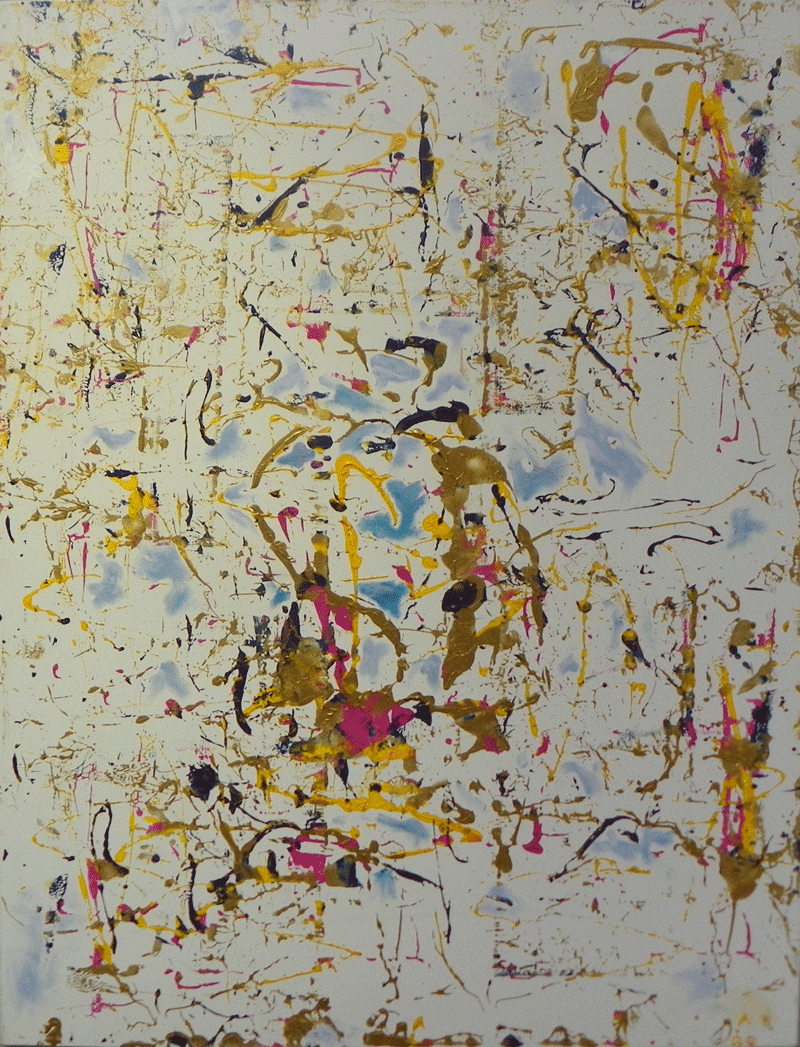
Absolutely Abstract 2015

Absolutely Abstract 2015, The Philadelphia Sketch Club

The Philadelphia Sketch Club‘s Annual Absolutely Abstract Exhibition is like wandering through a magic garden of random events captured in slow motion time. Time is elemental to the wide selection of contemporary abstract art filling the historic gallery. It’s so weird because The Philadelphia Sketch Club is the oldest artist’s club in America and the abstract show is about exploring the time when abstract art was considered radical.

The collection of artworks range from action paintings, deep impressionist landscapes, nature photography and more. There is a lot of art in the show, every effort was made to make it fit. At dinner tonight my host was cranky about overly edited art shows and whether it’s better to display salon style or not. It would be really fun to edit the show to a top 40 but there is great pleasure in the sensual overload of an abundance of art.

Absolutely Abstract 2015Absolutely Abstract 2015, The Philadelphia Sketch Club, Michael Cooper, Fertility Figure Gone Wild, wood, clay and paint

Fertility Figure Gone Wild manages to find an alternate reality space in a room full of enthusiast competition for attention. The piece is interactive and modulates the space around it with depth of force field, developing a conversation with the viewer. Dream-like states flow while scanning and gazing, the temporal information flows like time in a multiverse.

The space does feel like a time capsule with reflections on the past and illumination of the future in color and marks, architecture and history. Connecting with deep primal image recognition and stories seem to flow through the room like a stream of consciousness. Abstraction is all around, our peripheral vision is abstract shapes and marks that communicates information to the consciousness. Absolutely.

Absolutely Abstract 2015Absolutely Abstract 2015, The Philadelphia Sketch Club

2015 Absolutely Abstract Open Juried Exhibition through September 19, 2015. 235 South Camac Street, The Avenue of the Artists, Philadelphia, PA, 19107. Hours: Wednesday, Friday, Saturday & Sunday 1:00 – 5:00pm

Written and photographed by DoN Brewer

Like The Philadelphia Sketch Club on facebook

Follow @PhilaSketchClub on Twitter

Like DoNArTNeWs Philadelphia Art News Blog on facebook

Follow the new DoNArTNeWs.com

Follow DoN on Twitter @DoNNieBeat58

DoNArTNeWs on Tumblr

DoN Brewer on Pinterest

@donniebeat on Instagram

Affiliate Marketing [disclosure page] Shop on-line and help support DoNArTNeWs

Donate via safe and secure PayPal in the sidebar.


UNcommons

UNcommons, Little Berlin, University of PennsylvaniaKaitlin Pomerantz

UNcommons

September 4 – 27, 2015. Opening reception Friday, September 4 from 6 to 9 PM

Little Berlin gallery is pleased to present UNcommons, a guest exhibition with the University of Pennsylvania. UNcommons deals with issues of space and spatial interventions in the physical, psychological, and digital worlds. The exhibition showcases five artists – chukwumaa, Shaina Gates, E. Jane, Kaitlin Pomerantz, and Marianna Williams. The opening reception will take place at the gallery, located at 2430 Coral Street in Kensington, on Friday September 4th from 6:00 to 9:00PM.

Each of the five artists featured in UNcommons presents possibilities for reconfiguring, remembering, and disrupting our experience of space in a variety of media, including natural and found materials, paper, photography, video, and sound. Further information about the artists can be found on the event page for the exhibition: http://littleberling.org/  Curated by Haely Chang, Kirsten Gill and Hilary Whitham, UNcommons is the first exhibition in the newly launched Incubation Series, a collaboration between students in the Fine Arts and History of Art graduate programs at the University of Pennsylvania.
UNcommons is sponsored by the Departments of Fine Arts and History of Art at the University of Pennsylvania. For more information about the exhibition or the series, please contact Hilary Whitham at pennincubationseries@gmail.com.”

Little Berlin is a cooperative exhibition space run by approximately 10 people who curate the space using a collaborative, do-it-yourself ethic. Located in Kensington, Philadelphia, members actively pursue community outreach through ongoing projects such as the Philadelphia Public History Truck, The Fairgrounds community garden as well as monthly exhibitions. As opposed to an artist cooperative, we do not usually show our own artwork. Instead, we feature emerging and established artists from the neighborhood, from around Philadelphia, and from across the country.

little berlin is located in the Viking Mill, a historic textile-mill turned artist space in the Kensington neighborhood of Philadelphia located at Boston St. at Coral St. – enter through the courtyard at Coral St.” – Little Berlin

Like Little Berlin on facebook

Like DoNArTNeWs Philadelphia Art News Blog on facebook

Follow the new DoNArTNeWs.com

Follow DoN on Twitter @DoNNieBeat58

DoNArTNeWs on Tumblr

DoN Brewer on Pinterest

@donniebeat on Instagram

Affiliate Marketing [disclosure page] Shop on-line and help support DoNArTNeWs

Donate via safe and secure PayPal in the sidebar.
City

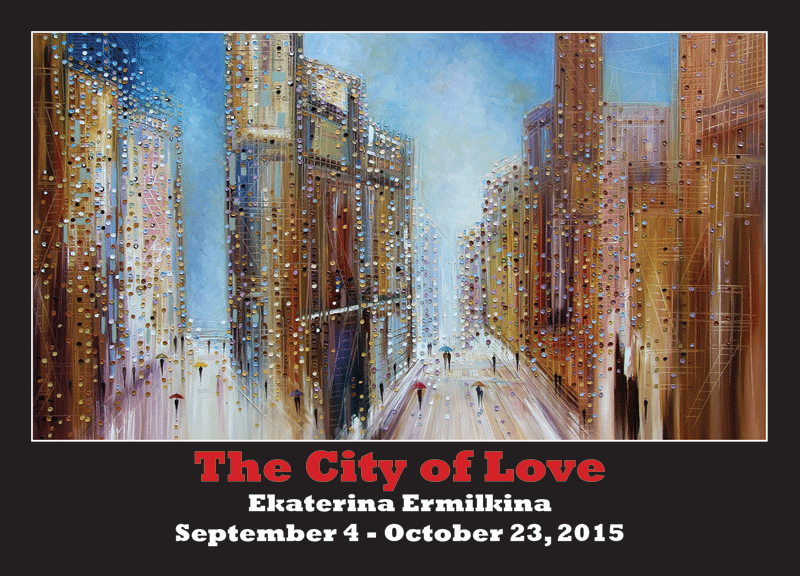
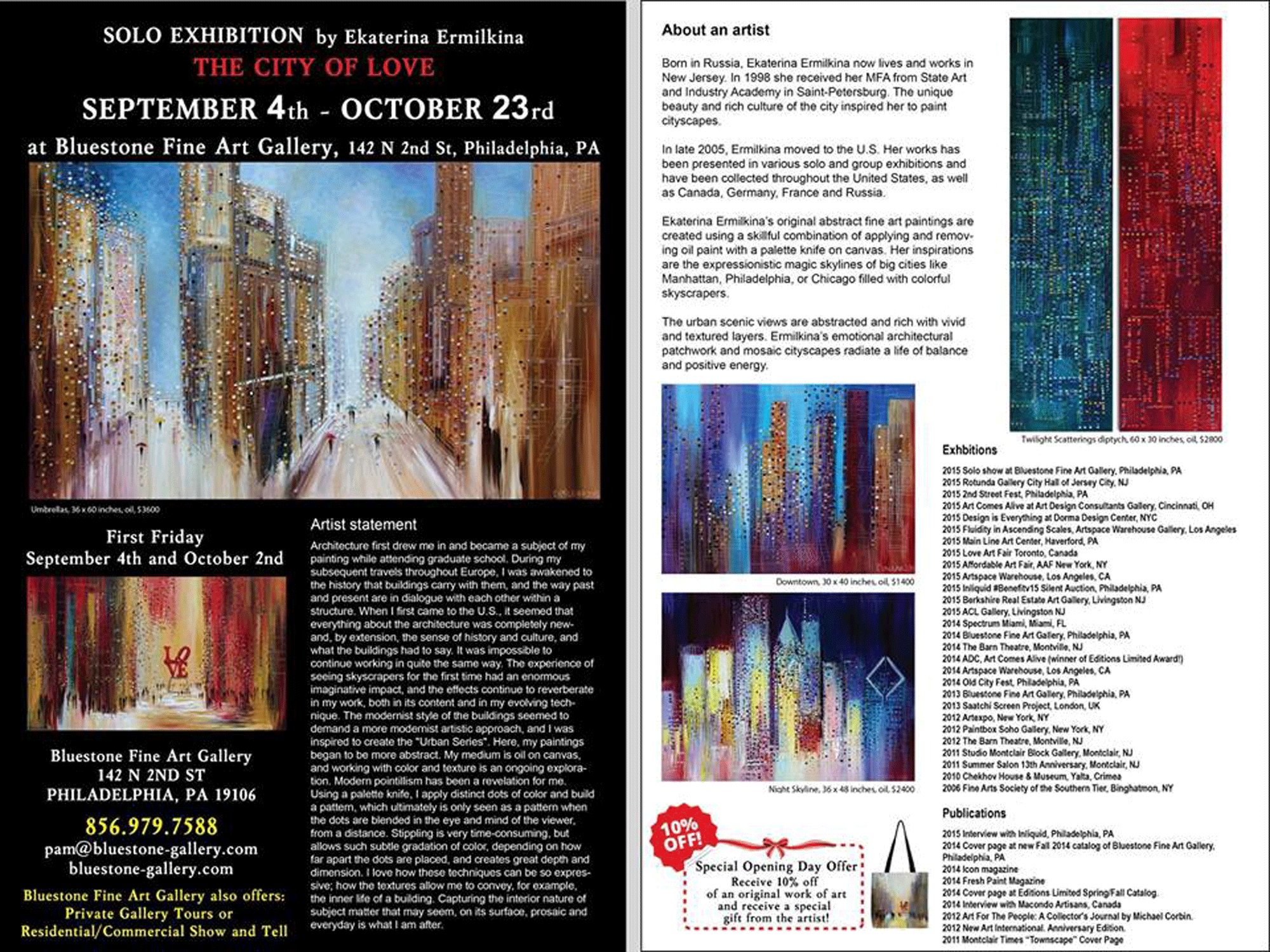
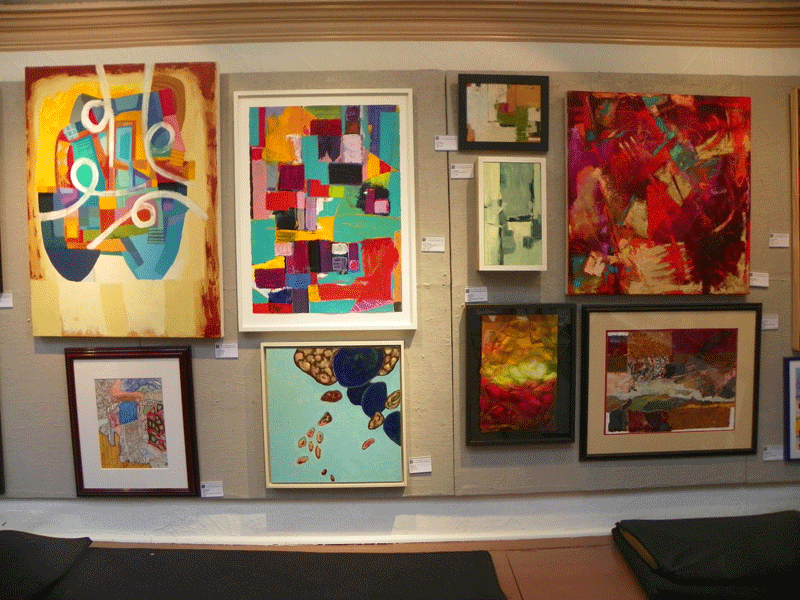
The City of Love, Ekaterina Ermilkina

The City of Love, Ekaterina Ermilkina, Bluestone Fine Art Gallery

The City of Love, Ekaterina Ermilkinaclick for large version

Ekaterina Ermilkina, The City of LoveBluestone Fine Art Gallery, 142 N 2nd St
Philadelphia, PA 19106

September 4th – October 23rd, 2015

First Friday September 4th & October 2nd, 2015

“Established in 2011 by Pam Regan, Bluestone Fine Art Gallery has been operating in the Old City District of Philadelphia on the corner of Second and Quarry streets. The gallery features original works by contemporary and traditional artists in a range of mediums, including painting, ceramics and sculpture. Our artists’ hail from Philadelphia and around the country – many of the city’s most well-known and emerging artists have exhibited their works in group and solo shows. Each month, we host new exhibitions that kick off during Philadelphia’s popular First Fridays that bring hundreds of art lovers into the neighborhood for special events and openings year round.

Our goal is to showcase the most engaging works in a welcoming atmosphere during regular business hours and by private appointment. We work closely with collectors, designers and architects, helping clients select the art best suited to residences, businesses and other destinations in the tri-state area. For our clients who visit us via Amazon Art, we offer complimentary shipping.  For our local clients, we offer complimentary delivery and installation.  Bluestone Fine Art Gallery is free and open to the public.” – Bluestone Fine Art Gallery

Like Bluestone Fine Art Gallery on facebook

Like DoNArTNeWs Philadelphia Art News Blog on facebook

Follow the new DoNArTNeWs.com

Follow DoN on Twitter @DoNNieBeat58

DoNArTNeWS on Tumblr

DoN Brewer on Pinterest

@donniebeat on Instagram

Affiliate Marketing [disclosure page] Shop on-line and help support DoNArTNeWs

Donate via safe and secure PayPal in the sidebar.
A Moment

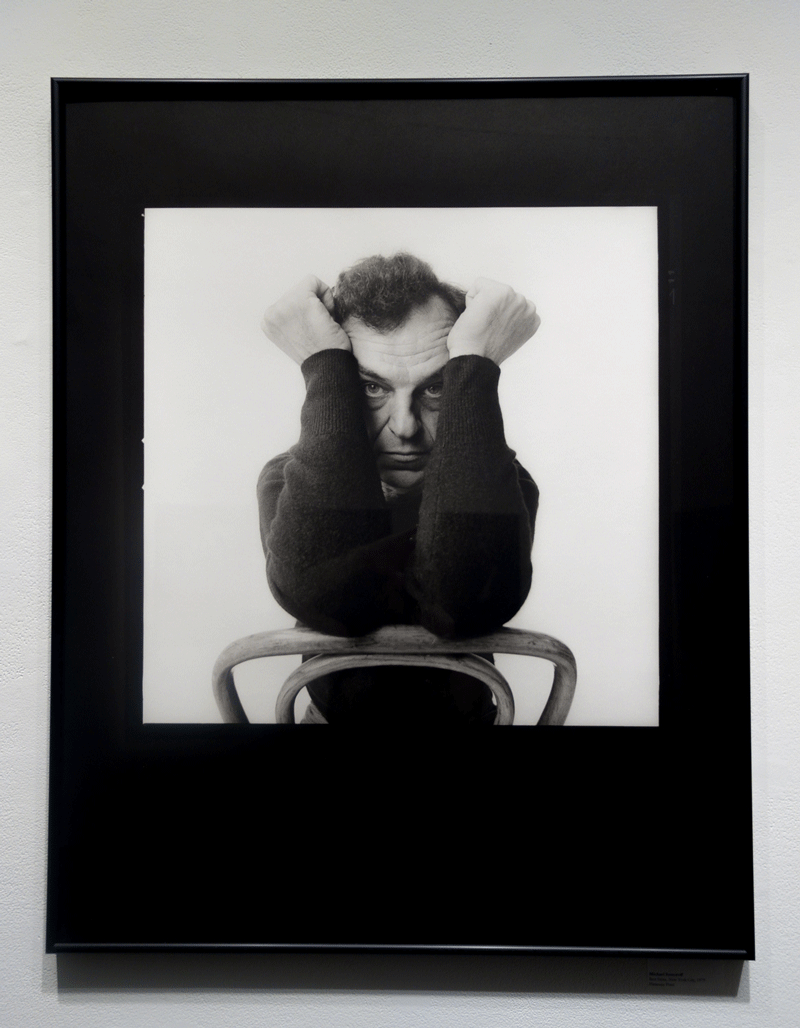
moment3 Arnold Newman, New York City, 1979, platinum print

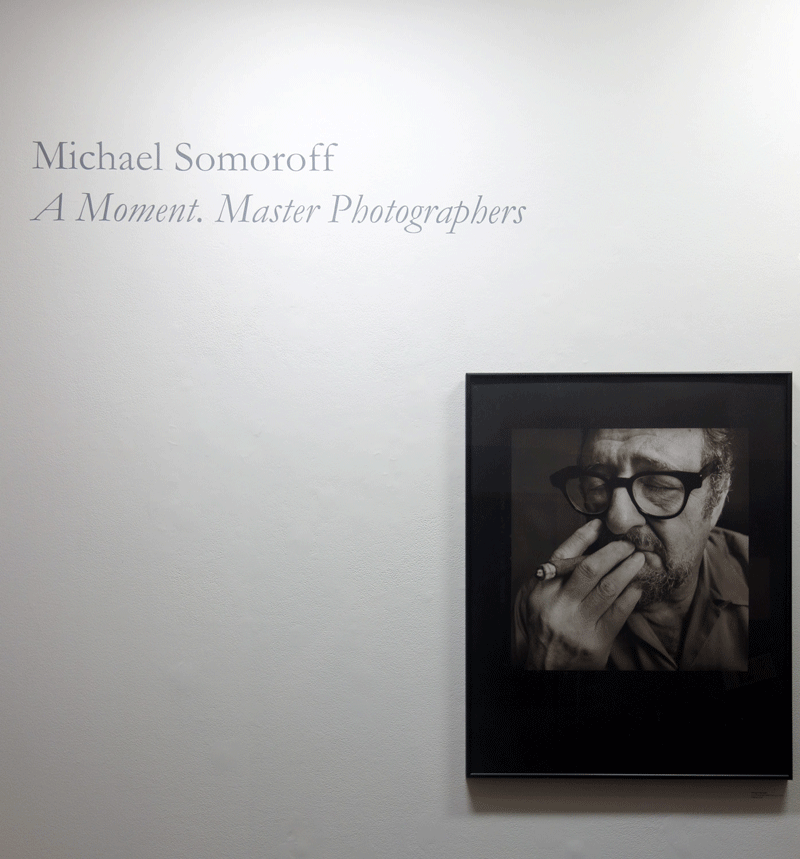
Michael Somoroff: A Moment.

Master Photographers, Sol Mednick Gallery of Photography, UArts

Michael Somoroff: A Moment, Sol Mednick Gallery of Photography Michael Somoroff: A MomentSol Mednick Gallery of PhotographyThe University of the Arts

Written and photographed  by Laura Storck

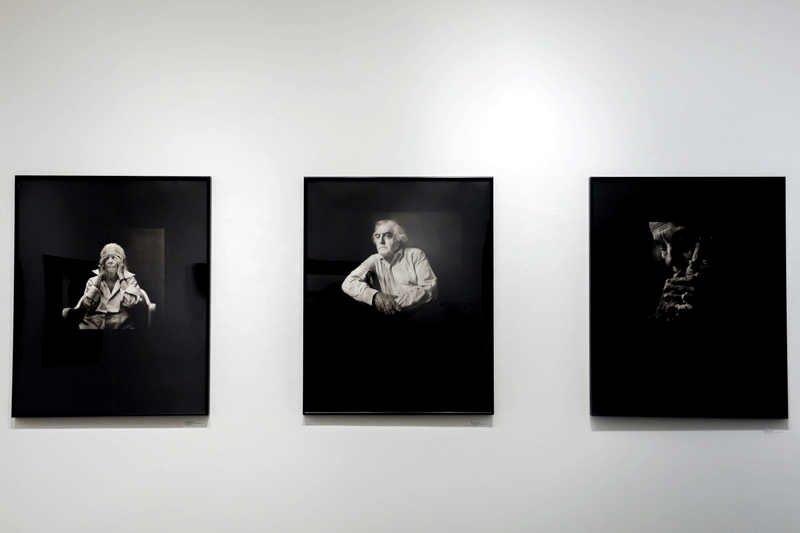
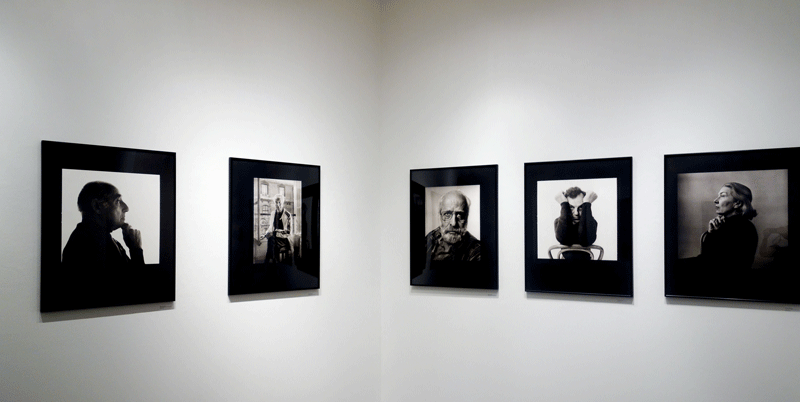
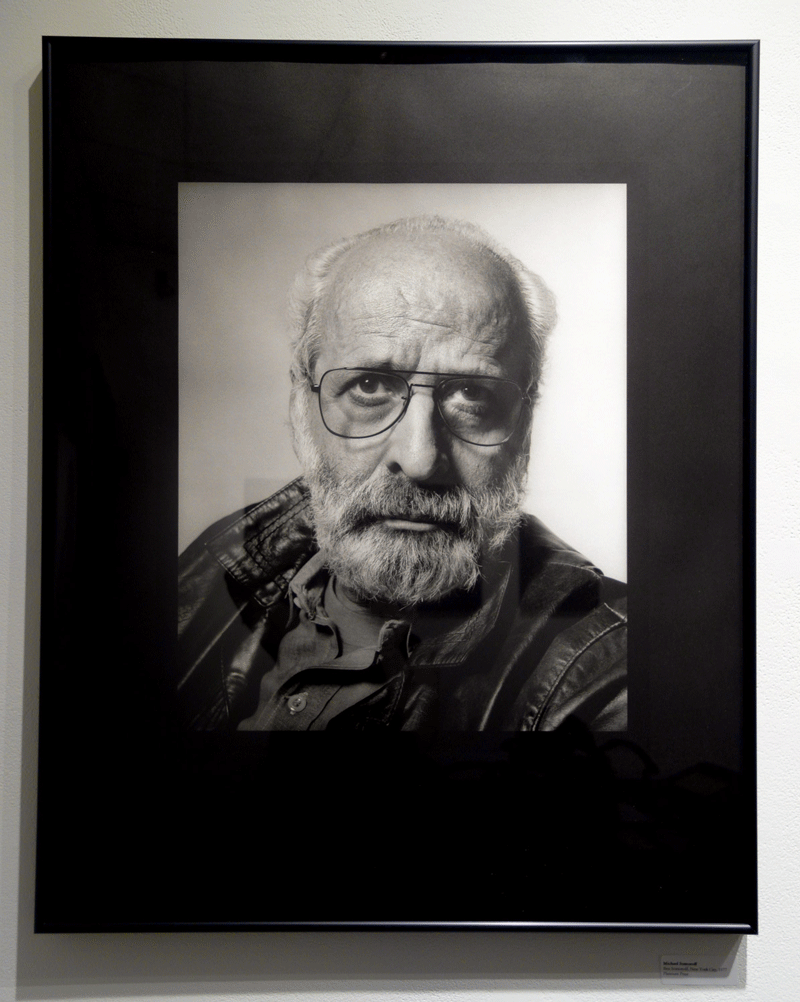
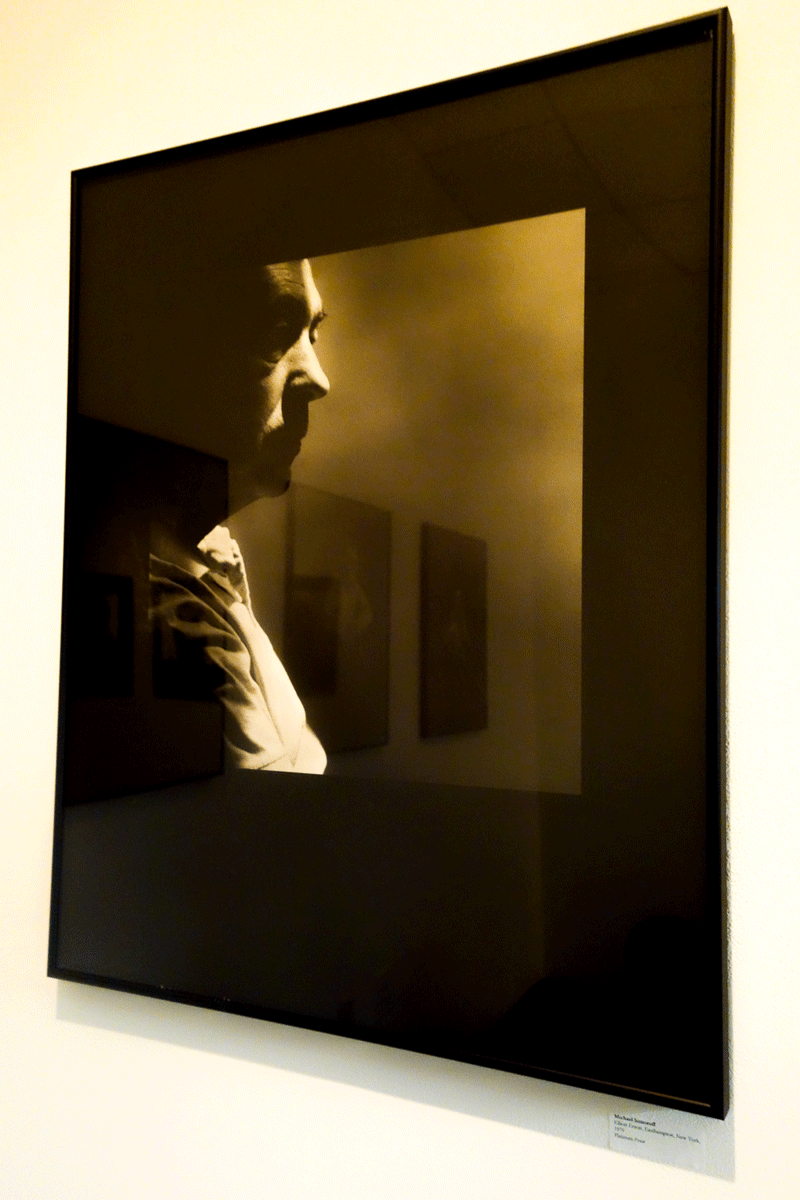
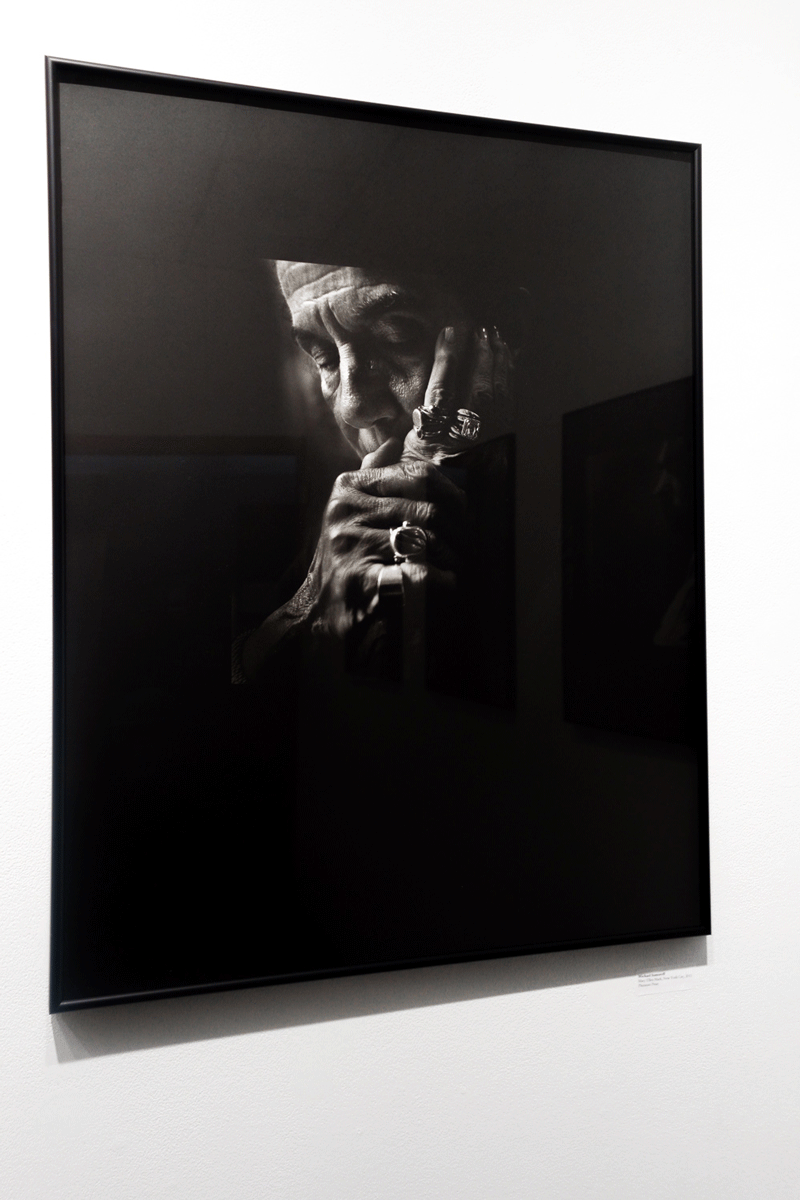
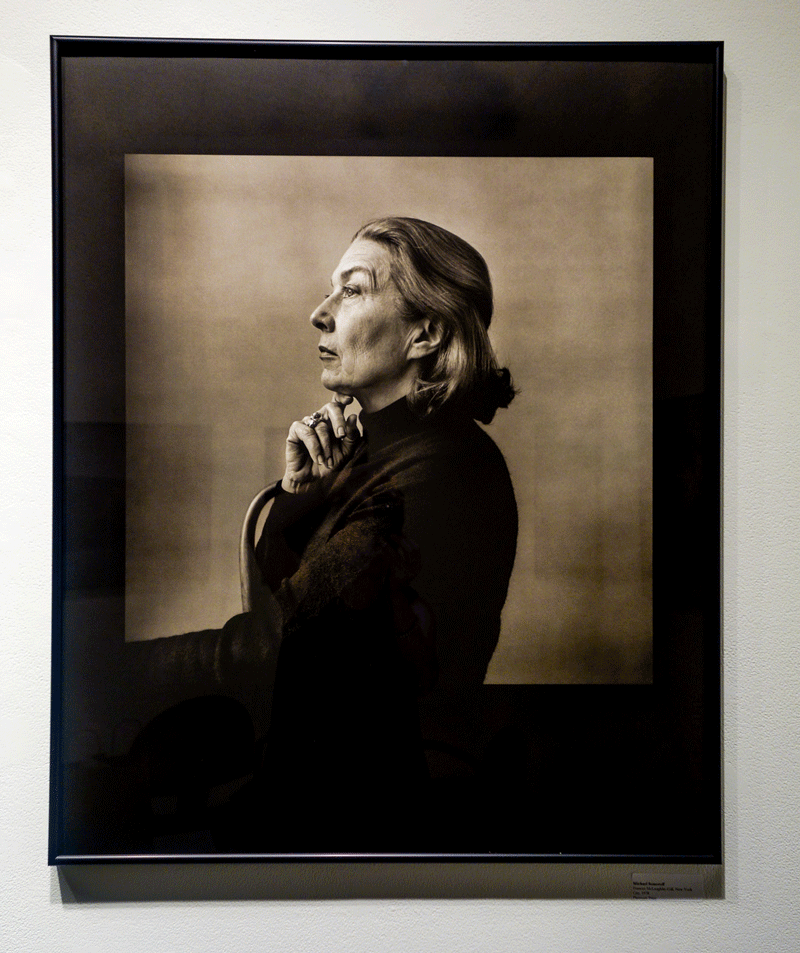
As a photography student at The University of the Arts, I make every effort to take advantage of the wonderful rotating exhibits on display Sol Mednick Gallery of Photography on the 15th floor. I was especially motivated to see the current exhibit by ‘Michael Somoroff: A Moment. Master Photographers‘ which includes several gorgeous platinum prints of well-known luminaries such as Elliott Erwitt, Mary Ellen Mark, Frances McLaughlin-Gill, Ben Somoroff, Ben Stern, and Arnold Newman.

moment2Michael Somoroff: A MomentSol Mednick Gallery of PhotographyThe University of the Arts

According to The University of the Arts May 2015 news release of this exhibit:

Between 1977 and 1983, Michael Somoroff, then a young New York photographer, had the privilege of photographing photographers who played a dominant role in shaping the medium during the climax of analog image making, including Robert Doisneau, Elliott Erwitt, Ralph Gibson, Jacques Henri Lartigue, Duane Michals and Helmut Newton, among others. He was first introduced to many of these icons through his father, Ben Somoroff, who studied under Alexey Brodovitch at the School of Industrial Arts in Philadelphia, now The University of the Arts, and had become a well-known and respected still life photographer working in both Philadelphia and New York. These portraits were originally created as a kind of visual journal, a tribute to the modern masters of the medium by a young photographer. Intensely personal, the images were never intended for publication and were put aside for many years. Thirty-five years later, this body of work is finally being shown and published.

moment4Ben Somoroff, New York City, 1977, platinum print
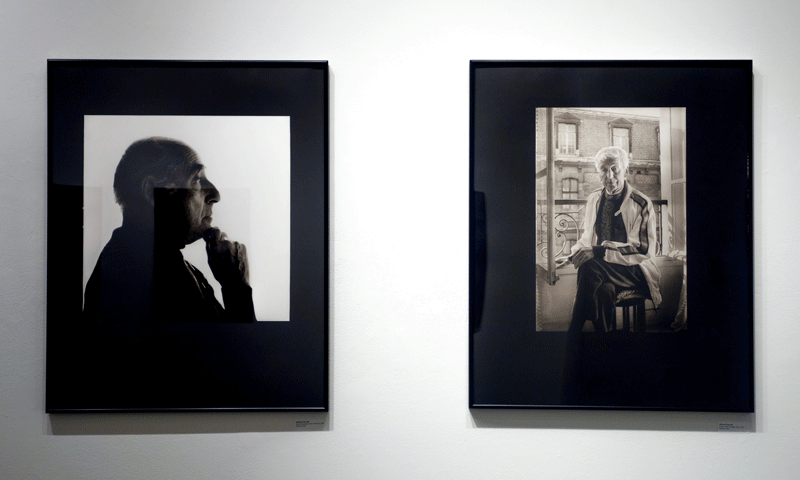
Michael Somoroff studied art and photography at the New School for Social Research in New York, opening his own studio in the mid-seventies, eventually moving for a time to Europe. In Europe, he contributed to such publications as Life, Vogue, Harper’s Bazaar, Stern, Time, and Der Spiegel. His work is represented in collections including the Museum of Modern Art, New York; Museum of Fine Arts, Houston; Smithsonian Institution, Washington, D.C.; and Museo Correr, Venice; it has been exhibited at the International Center of Photography, New York; Los Angeles County Museum of Art; San Francisco Museum of Modern Art; and Museum of Contemporary Art in Chicago. In 2006, Somoroff created a large-scale outdoor installation, “Illumination I” for the Rothko Chapel in Houston, as the first artist invited to do so since Barnett Newman. Somoroff’s homage to legendary photographer August Sander, “Absence of Subject,” was presented during the 2011 Venice Biennale, the only private exhibit in the artistic history of the city to be placed on Piazza San Marco. Since 2011, “Absence of Subject” has traveled continuously throughout Europe and soon in South America. In 2012, “A Moment. Master Photographers: Portraits” by Michael Somoroff was awarded Best Photo Books of the Year prize chosen by American Photo.

moment9Michael Somoroff: A MomentSol Mednick Gallery of PhotographyThe University of the Arts

Upon viewing the beautiful platinum printed image of each master photographer, I felt inspiration, connection, and catharsis. The platinum print process is prized for its rich, long tonal range that includes lush blacks as well as delicate gray mid-tones and for its ability to show fine detail. Somoroff rendered his subject’s essence with the utmost expertise and transcendence. To pay personal homage to the images of these icons felt akin to a spiritual journey in a sacred space.

moment8Mary Ellen Mark, New York City, 2011, platinum print, Michael Somoroff: A MomentSol Mednick Gallery of PhotographyThe University of the Artsmoment5Ben Stern, New York City, 1979, platinum print Michael Somoroff: A MomentSol Mednick Gallery of PhotographyThe University of the Arts
I felt especially moved when seeing Mary Ellen Mark’s portrait, and particularly saddened by her recent passing. I remember first learning about her work when visiting the Philadelphia Museum of Art in September 2012 for her exhibition Prom: Photographs by Mary Ellen Mark. This exhibit occurred in conjunction with her husband’s work, cinematographer Martin Bell’s film Prom (2010), and I was very fortunate to witness a roundtable discussion among Mary Ellen Mark, Martin Bell, and the curator of photographs of the PMA, Peter Barberie. Mary Ellen Mark’s photography has been a major influence on my desire to capture documentary and street images, which has therefore inspired and helped me to feel more empathy, compassion, and responsiveness toward the human condition.

moment6Elliott Erwitt, Easthampton, NY, 1979, platinum print, Michael Somoroff: A MomentSol Mednick Gallery of PhotographyThe University of the Arts
This experience forces me to ponder where my photographic path may lead…Will my portrait ever adorn a gallery wall? All I can offer with certainty is that I appreciate every little struggle and triumph along life’s serpentine journey; I cherish and find value in the many relationships I have formed; and I strive to keep going with continued optimism. Peach and love to all.

moment7Frances McLaughlin-Gill, New York City, 1978, platinum print, Michael Somoroff: A MomentSol Mednick Gallery of PhotographyThe University of the Arts

Now in it’s 37th year, the Sol Mednick Gallery of Photography offers a year-round regular schedule of exhibitions of contemporary photography. The only endowed gallery in Philadelphia dedicated solely to the exhibition of photography, the Mednick Gallery earned the Photo Review Award for service to photography. Associate Professor and former director of the Photography program Harris Fogel, who founded Gallery 1401 in 1999, has been director/curator of both galleries since 1997. Gallery hours are Monday through Friday, 10:00am – 5:00pm., Saturday and Sunday by appointment. The exhibit is on display through July 31st.

The University of the Arts, The Sol Mednick Gallery of Photography, Terra Hall, 15th Floor 211 South Broad Street, Philadelphia, PA 19102 (215) 717-6300

Event page – http://www.uarts.edu/about/sol-mednick-gallery

website – www.uarts.edu

Like The University of the Arts on facebook

Twitter @UArts

Written and photographed  by Laura Storck except where noted

Instagramhttp://instagram.com/laurastorck/

Facebook:  https://facebook.com/laura.h.storck

Twitter: @Laura_Storck

Like DoNArTNeWs Philadelphia Art News Blog on facebook

Follow the new DoNArTNeWs.com

Follow DoN on Twitter @DoNNieBeat58

DoNArTNeWs on Tumblr

DoN Brewer on Pinterest

@donniebeat on Instagram

Affiliate Marketing [disclosure page] Shop on-line and help support DoNArTNeWs

Donate via safe and secure PayPal in the sidebar.